Many people believe that bleeding gums while brushing or flossing is normal. It isn’t.
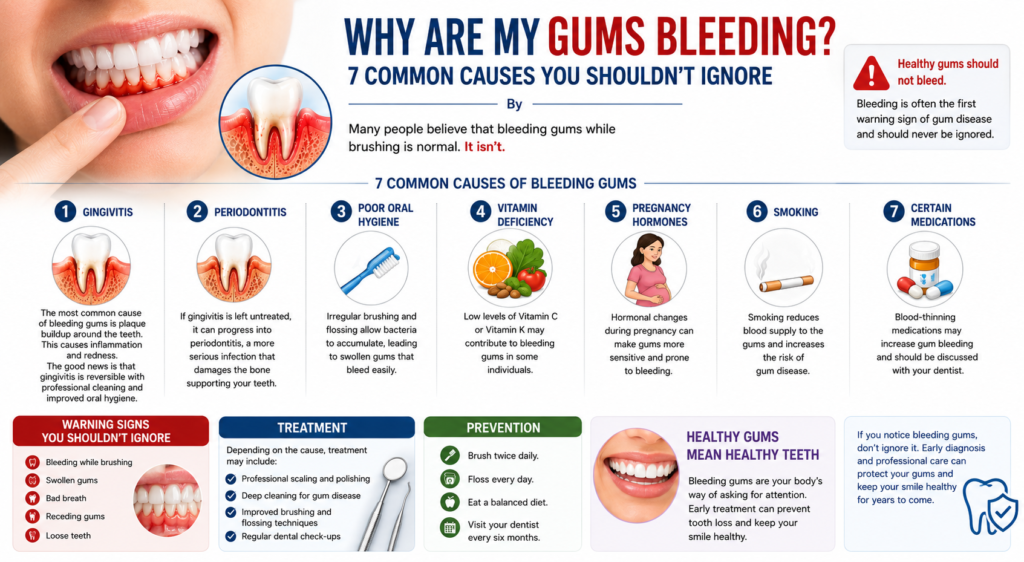
Healthy gums should never bleed. If you notice blood while brushing, flossing, or eating, it may be an early warning sign of an underlying dental problem. In most cases, bleeding gums indicate inflammation caused by plaque buildup or gum disease.
The good news is that early diagnosis and timely treatment can often reverse the problem and help protect your teeth and gums.
1. Gingivitis
The most common cause of bleeding gums is gingivitis, an early stage of gum disease caused by plaque buildup around the teeth.
Plaque contains bacteria that irritate the gums, leading to inflammation, redness, and bleeding.
Common Signs Include:
- Bleeding while brushing or flossing
- Red or swollen gums
- Tender gums
- Mild bad breath
The good news is that gingivitis is reversible with professional dental cleaning and improved oral hygiene.
2. Periodontitis
If gingivitis is left untreated, it can progress into periodontitis, a more advanced form of gum disease.
Periodontitis damages the gums and the bone supporting the teeth, increasing the risk of loose teeth and tooth loss.
Early treatment is essential to prevent permanent damage.
3. Poor Oral Hygiene
Irregular brushing and flossing allow plaque and bacteria to accumulate around the teeth and gums.
Over time, this buildup causes the gums to become swollen, inflamed, and more likely to bleed.
Maintaining a consistent oral hygiene routine is one of the best ways to prevent gum disease.
4. Vitamin Deficiency
Deficiencies in Vitamin C or Vitamin K may contribute to bleeding gums in some individuals.
A balanced diet rich in essential vitamins supports healthy gums and helps maintain good oral health.
5. Pregnancy Hormones
Hormonal changes during pregnancy can make the gums more sensitive and increase their tendency to bleed.
This condition, often referred to as pregnancy gingivitis, usually improves with good oral hygiene and regular dental care.
Pregnant women should continue routine dental check-ups to maintain healthy gums throughout pregnancy.
6. Smoking
Smoking significantly increases the risk of gum disease.
It reduces blood supply to the gums, weakens the body’s immune response, and slows healing, making gum infections more severe and difficult to treat.
Quitting smoking benefits both your oral health and your overall well-being.
7. Certain Medications
Some medications, particularly blood thinners, may increase the likelihood of gum bleeding.
Always inform your dentist about any medications you are taking so they can provide appropriate guidance and treatment.
Warning Signs You Shouldn’t Ignore
If you experience any of the following symptoms, schedule a dental examination as soon as possible:
- Bleeding while brushing or flossing
- Swollen or tender gums
- Persistent bad breath
- Receding gums
- Loose teeth
Ignoring these warning signs may allow gum disease to progress and increase the risk of permanent tooth loss.
Treatment for Bleeding Gums
The most appropriate treatment depends on the underlying cause.
Your Dentist May Recommend:
- Professional scaling and polishing
- Deep cleaning (Scaling & Root Planing) for gum disease
- Personalized brushing and flossing instructions
- Regular dental check-ups and professional cleaning
- Periodontal treatment for advanced gum disease
Early treatment is often simple, effective, and helps prevent long-term complications.
How to Prevent Bleeding Gums
Healthy daily habits play an important role in maintaining healthy gums.
Tips to Protect Your Gums
- Brush your teeth twice daily using a soft-bristled toothbrush
- Floss every day
- Eat a balanced, nutritious diet
- Avoid tobacco products
- Visit your dentist every six months for routine check-ups and professional cleaning
Consistent oral care can significantly reduce your risk of gum disease and bleeding gums.
Healthy Gums Mean Healthy Teeth
Your gums provide the foundation that supports your teeth. When your gums are healthy, your teeth are more likely to remain strong and stable for years to come.
Bleeding gums are your body’s way of asking for attention. Don’t ignore the warning signs.
At Sanjivan Dental Care, we provide comprehensive gum evaluations, professional dental cleaning, and advanced periodontal treatment to help protect your smile and maintain lifelong oral health.
Book your dental consultation today and take the first step toward healthier gums and a healthier smile.