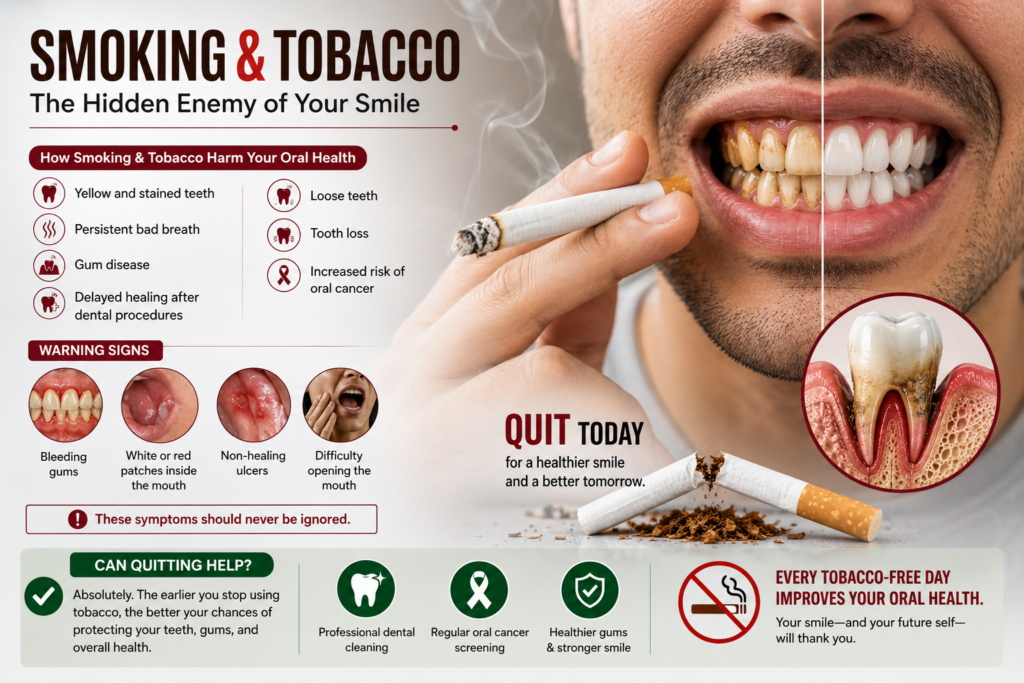
Smoking and chewing tobacco are widely known for their harmful effects on the lungs and heart, but many people don’t realize that tobacco is also one of the biggest threats to oral health.
Whether you smoke cigarettes, use chewing tobacco, or consume other tobacco products, these habits can seriously damage your teeth, gums, and the tissues inside your mouth. Over time, tobacco use increases the risk of gum disease, tooth loss, delayed healing, and even oral cancer.
The good news is that quitting tobacco at any stage can significantly improve your oral and overall health.
How Does Smoking and Tobacco Affect Your Oral Health?
The harmful chemicals present in tobacco reduce blood flow to the gums, weaken the body’s natural defense system, and make it more difficult for your mouth to fight infections.
As a result, tobacco users are more likely to develop serious dental problems that may require extensive treatment if left untreated.
Common Effects of Smoking & Tobacco
Regular tobacco use can lead to several oral health problems, including:
- Yellow or stained teeth
- Persistent bad breath (Halitosis)
- Gum disease (Periodontitis)
- Delayed healing after dental procedures
- Loose teeth
- Tooth loss
- Increased risk of oral cancer
These problems often develop gradually, making regular dental check-ups even more important for tobacco users.
Warning Signs You Should Never Ignore
Early detection can make a significant difference in preventing serious oral health complications.
Visit your dentist immediately if you notice any of the following:
- Bleeding gums
- White or red patches inside the mouth
- Non-healing mouth ulcers
- Difficulty opening the mouth
- Persistent bad breath
- Loose teeth or gum recession
These symptoms may indicate gum disease, precancerous changes, or other oral health conditions that require prompt evaluation.
Can Quitting Tobacco Help?
Absolutely.
The earlier you stop smoking or chewing tobacco, the better your chances of protecting your teeth, gums, and overall health.
After quitting, your mouth gradually begins to heal, your risk of gum disease decreases, and treatment outcomes improve significantly.
After Quitting Tobacco, Your Dentist May Recommend:
- Professional dental cleaning (Scaling & Polishing)
- Regular oral cancer screening
- Gum disease evaluation and treatment
- Professional stain removal
- Routine dental check-ups every six months
Taking these preventive steps can help restore your oral health and detect any problems at an early stage.
How to Protect Your Smile
Simple lifestyle changes can make a big difference in maintaining healthy teeth and gums.
Healthy Habits to Follow
- Quit smoking and all forms of tobacco
- Brush your teeth twice daily with fluoride toothpaste
- Floss every day
- Visit your dentist for regular dental check-ups
- Get professional teeth cleaning regularly
- Perform routine oral cancer screenings if you use tobacco
Maintaining these habits helps reduce your risk of gum disease, tooth loss, and oral cancer.
Why Regular Dental Check-ups Matter
Many tobacco-related dental problems develop silently without causing pain in the early stages.
Routine dental examinations allow your dentist to detect gum disease, tooth decay, suspicious oral lesions, and early signs of oral cancer before they become more serious.
Early diagnosis often leads to simpler, more effective treatment and better long-term outcomes.
Conclusion
Smoking and tobacco use don’t just affect your lungs—they can have a lasting impact on your smile, gums, teeth, and overall quality of life.
If you smoke or use chewing tobacco, it’s never too late to quit. Every tobacco-free day helps your mouth heal and reduces your risk of serious dental problems.
At Sanjivan Dental, we provide comprehensive oral health examinations, professional dental cleaning, gum disease treatment, and routine oral cancer screening to help protect your smile.
Take the first step toward a healthier mouth today. Book your dental check-up and give your smile the care it deserves.