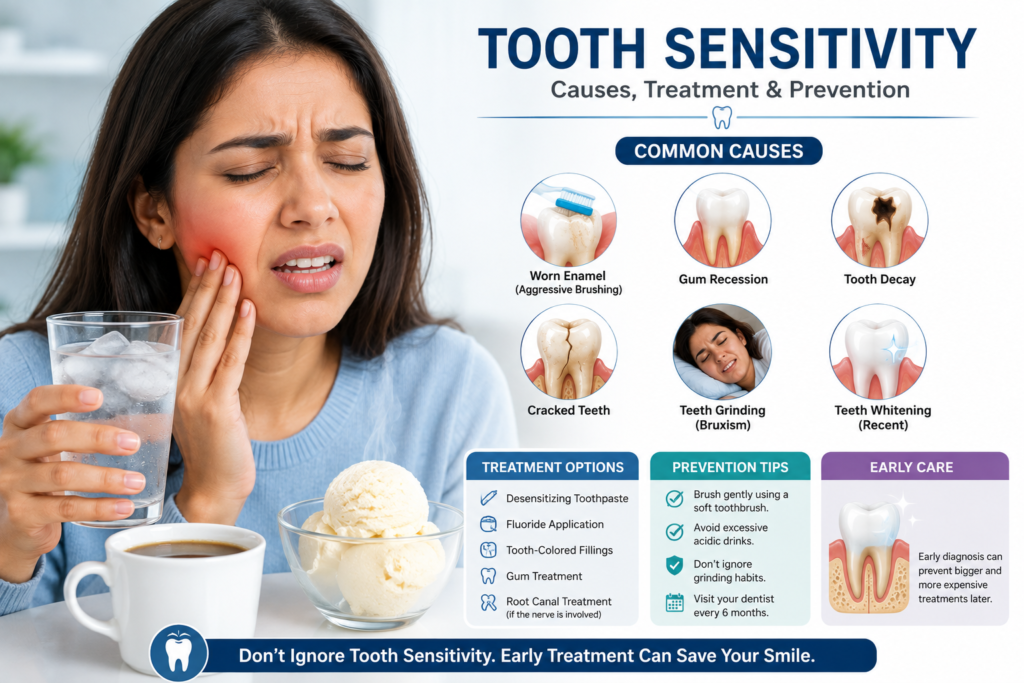
Have you ever experienced a sudden, sharp pain while drinking cold water, sipping hot tea or coffee, eating ice cream, or enjoying sweets? If yes, you may be suffering from tooth sensitivity.
Tooth sensitivity is one of the most common dental problems affecting people of all ages. While the discomfort may seem minor at first, it should never be ignored. In many cases, sensitive teeth are an early warning sign of an underlying dental issue that requires professional attention.
The good news is that with proper diagnosis and timely treatment, tooth sensitivity can usually be managed effectively.
What Causes Tooth Sensitivity?
Tooth sensitivity occurs when the protective enamel wears down or the tooth roots become exposed, allowing external stimuli such as hot, cold, sweet, or acidic foods to reach the sensitive inner layer of the tooth.
Some of the most common causes include:
1. Worn Tooth Enamel
Brushing too aggressively or using a hard-bristled toothbrush can gradually wear away the protective enamel, exposing the sensitive dentin underneath.
2. Gum Recession
When the gums recede, the tooth roots become exposed. Unlike the crown of the tooth, the roots are not protected by enamel, making them much more sensitive.
3. Tooth Decay (Cavities)
Dental cavities can expose the deeper layers of the tooth, causing pain or sensitivity while eating or drinking.
4. Cracked or Chipped Teeth
Small cracks may allow hot, cold, or sweet substances to reach the inner nerve of the tooth, leading to discomfort and sharp pain.
5. Teeth Grinding (Bruxism)
Habitual grinding or clenching of the teeth places excessive pressure on the enamel, gradually wearing it down and increasing tooth sensitivity.
6. Recent Teeth Whitening
Some patients experience temporary sensitivity after professional teeth whitening procedures. This usually improves within a few days.
How Is Tooth Sensitivity Treated?
The treatment depends entirely on the underlying cause of the sensitivity. After a thorough dental examination, your dentist will recommend the most appropriate treatment.
Treatment Options May Include:
- Desensitizing toothpaste
- Professional fluoride application
- Tooth-colored fillings
- Gum disease treatment
- Root canal treatment (if the tooth nerve is affected)
Early diagnosis helps prevent the condition from becoming more severe and may reduce the need for complex dental procedures.
Can Tooth Sensitivity Be Prevented?
Yes. Maintaining good oral hygiene and following healthy dental habits can significantly reduce your risk of developing sensitive teeth.
Tips to Prevent Tooth Sensitivity
- ✔️ Brush gently using a soft-bristled toothbrush.
- ✔️ Use a fluoride toothpaste recommended by your dentist.
- ✔️ Avoid excessive consumption of acidic foods and beverages.
- ✔️ Don’t ignore teeth grinding or clenching habits.
- ✔️ Visit your dentist every six months for regular check-ups and professional cleaning.
- ✔️ Treat cavities and gum disease as early as possible.
Simple preventive measures today can help protect your teeth for years to come.
When Should You Visit a Dentist?
You should schedule a dental appointment if you experience:
- Sharp pain while eating or drinking hot, cold, sweet, or acidic foods
- Sensitivity that lasts for several days
- Pain while brushing your teeth
- Sensitivity in a single tooth
- Sensitivity accompanied by swelling or visible tooth damage
Ignoring these symptoms may allow the underlying problem to worsen over time.
Conclusion
Tooth sensitivity is often more than just a temporary discomfort. It can be the first sign of an underlying dental problem such as enamel wear, gum recession, tooth decay, or a cracked tooth.
Early diagnosis and timely treatment can relieve your discomfort, protect your natural teeth, and help prevent more extensive and expensive dental procedures in the future.
At Sanjivan Dental, we use advanced diagnostic techniques and personalized treatment plans to identify the exact cause of tooth sensitivity and provide effective, long-lasting solutions.
If you’re experiencing sensitive teeth, don’t ignore the warning signs. Book your dental consultation today and enjoy eating, drinking, and smiling with confidence again.