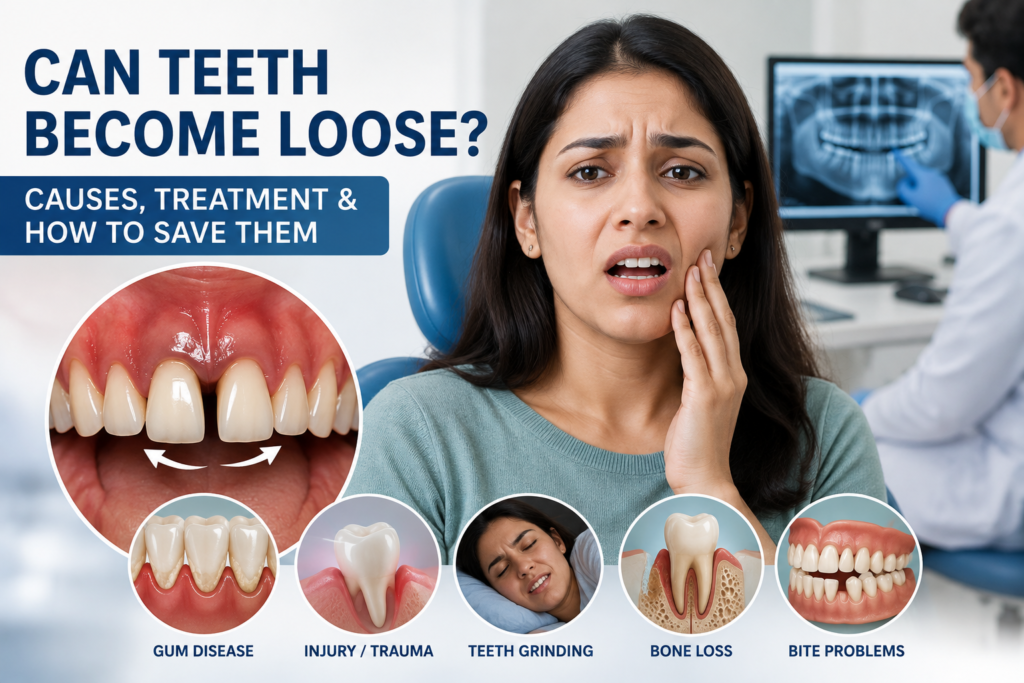
Many people believe that loose teeth only happen to children. However, if an adult notices a tooth becoming loose or moving, it should never be ignored. A loose tooth is often a warning sign that the gums, supporting bone, or other structures holding the tooth in place have been affected.
The good news is that, with early diagnosis and appropriate treatment, many loose teeth can be saved. Understanding the underlying cause is the first step toward protecting your oral health and preventing permanent tooth loss.
Why Do Adult Teeth Become Loose?
Several conditions can cause a permanent tooth to become loose. Identifying the cause early helps your dentist recommend the most effective treatment.
1. Gum Disease (Periodontitis)
The most common cause of loose teeth in adults is advanced gum disease (periodontitis). Harmful bacteria gradually damage the gums and destroy the bone that supports the teeth.
Common Signs Include:
- Bleeding gums
- Persistent bad breath
- Gum recession
- Tooth mobility
Without treatment, gum disease can eventually lead to tooth loss.
2. Injury or Trauma
A fall, sports injury, or accident can damage the ligaments and surrounding tissues that hold a tooth in place. Depending on the severity of the injury, prompt dental treatment may help save the tooth.
3. Teeth Grinding (Bruxism)
Constant grinding or clenching places excessive pressure on the teeth and their supporting structures. Over time, this repeated force can cause teeth to loosen and wear down.
4. Bone Loss
Conditions such as osteoporosis or untreated gum disease can reduce the amount of bone supporting the teeth, making them less stable over time.
5. Bite Problems
Uneven biting forces, missing teeth, or an improper bite can overload certain teeth. Continuous excessive pressure may gradually cause tooth mobility.
Can a Loose Tooth Be Saved?
In many cases, yes. Whether a loose tooth can be saved depends on the underlying cause and how early treatment begins.
Treatment Options May Include:
- Professional deep cleaning (Scaling & Root Planing)
- Gum disease treatment
- Splinting the loose tooth
- Bite adjustment
- Bone grafting (selected cases)
- Dental implants if the tooth cannot be saved
The earlier the treatment starts, the better the chances of preserving your natural tooth.
When Should You Visit a Dentist?
If you notice any of the following symptoms, schedule a dental appointment as soon as possible:
- A tooth feels loose or moves
- Bleeding gums
- Pain while biting or chewing
- Pus around the gums
- Persistent bad breath
Ignoring these warning signs may result in progressive bone loss and permanent tooth loss.
How to Prevent Loose Teeth
Good oral hygiene and regular dental care play a major role in preventing loose teeth.
Tips to Protect Your Teeth:
- Brush your teeth twice daily
- Floss every day
- Visit your dentist for regular check-ups
- Avoid tobacco products
- Treat gum disease early
- Wear a mouthguard if you grind your teeth
Preventive care is the best way to maintain healthy gums and strong supporting bone.
Conclusion
A loose tooth in an adult is never normal and should always be evaluated by a dentist. Early diagnosis and timely treatment can often preserve your natural tooth and prevent more complex dental procedures in the future.
At Sanjivan Dental, we use advanced diagnostic technology and personalized treatment planning to identify the cause of tooth mobility and provide the most appropriate treatment for every patient.
If you notice any movement in your teeth, don’t wait. Book your dental consultation today and protect your smile before the problem becomes more serious.