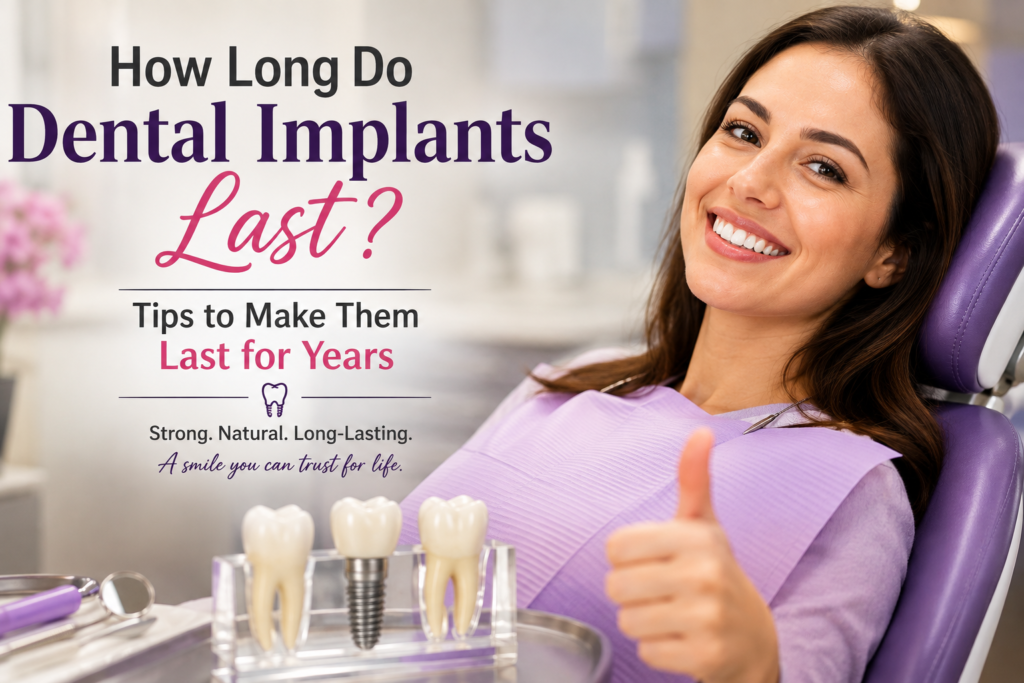
Dental implants are one of the most successful and long-lasting solutions for replacing missing teeth. They are designed to look, feel, and function like natural teeth, allowing you to eat, smile, and speak with confidence.
One of the most common questions patients ask is:
“How long will my dental implant last?”
The good news is that, with proper care and regular dental check-ups, a dental implant can last 20 years or more. In many cases, the implant itself can last a lifetime.
What Is a Dental Implant?
A dental implant is a small titanium post that replaces the root of a missing tooth. It is surgically placed into the jawbone, where it gradually bonds with the bone through a natural healing process known as osseointegration.
Once healing is complete, a custom-made dental crown is attached to the implant, creating a strong, stable, and natural-looking replacement tooth.
How Long Does a Dental Implant Last?
A dental implant consists of two main components, each with a different lifespan.
Titanium Implant (Artificial Root)
The titanium implant is designed to become a permanent part of your jawbone. With good oral hygiene and regular maintenance, it can often last a lifetime.
Dental Crown (Artificial Tooth)
The crown attached to the implant is subject to everyday chewing forces. On average, it lasts 10–15 years before it may need replacement due to normal wear and tear.
What Affects the Lifespan of Dental Implants?
Several important factors influence how long a dental implant will remain healthy and functional.
1. Good Oral Hygiene
Healthy gums are essential for long-term implant success.
To maintain your implant:
- Brush your teeth twice daily.
- Clean between your teeth using dental floss or interdental brushes.
- Maintain good overall oral hygiene.
2. Regular Dental Check-ups
Routine dental examinations and professional cleanings help detect minor problems before they become serious.
Regular follow-up visits are one of the most effective ways to protect your dental implant.
3. Smoking
Smoking reduces blood flow to the gums, delays healing, and significantly increases the risk of implant failure.
Quitting smoking greatly improves the long-term success of dental implants.
4. Teeth Grinding (Bruxism)
Grinding or clenching your teeth places excessive pressure on both implants and natural teeth.
If you grind your teeth during sleep, your dentist may recommend a custom night guard to protect your implant restoration.
5. Overall Health
Well-controlled medical conditions, such as diabetes, generally allow implants to heal successfully.
Maintaining good overall health supports healthy gums, strong bone, and long-term implant success.
Can Dental Implants Fail?
Dental implants have a success rate of over 95%, making them one of the most predictable dental treatments available.
However, complications can occur if proper care is not maintained.
Common Reasons for Implant Failure
- Poor oral hygiene
- Gum infection around the implant (Peri-implantitis)
- Smoking
- Excessive biting or chewing forces
- Inadequate bone support
- Missing regular dental check-ups
Early diagnosis and prompt treatment can often prevent these complications.
How to Make Your Dental Implant Last Longer
Following a few simple habits can significantly increase the lifespan of your implant.
Tips for Long-Term Implant Success
- Brush twice daily using a soft-bristled toothbrush.
- Clean around the implant every day.
- Visit your dentist every six months.
- Avoid chewing ice and other very hard objects.
- Quit smoking.
- Wear a night guard if you grind your teeth.
These simple preventive measures help protect both your implant and your natural teeth.
Benefits of Dental Implants
Dental implants offer several advantages over traditional dentures and dental bridges.
Why Choose Dental Implants?
- Look and feel like natural teeth
- Restore normal chewing ability
- Help preserve jawbone
- Do not require support from adjacent healthy teeth
- Improve speech and confidence
- Provide a strong, stable, and long-lasting tooth replacement solution
Frequently Asked Questions
Are Dental Implants Permanent?
The titanium implant is designed to be permanent and can often last a lifetime when properly maintained.
Does the Dental Crown Need Replacement?
Yes. The crown is exposed to daily chewing forces and may require replacement after approximately 10–15 years, while the implant itself usually remains healthy.
Is Dental Implant Surgery Painful?
Implant placement is performed under local anesthesia. Most patients experience only mild discomfort for a few days after the procedure, which is usually well controlled with prescribed medications.
Can Senior Citizens Get Dental Implants?
Yes. Age alone is not a limiting factor. Healthy gums, sufficient jawbone, and good overall health are much more important than age.
Conclusion
Dental implants are among the most durable, reliable, and predictable solutions for replacing missing teeth.
With good oral hygiene, regular dental check-ups, and healthy lifestyle habits, they can provide decades of comfortable function while restoring your smile and confidence.
If you’re considering dental implants, consult an experienced implant dentist to determine the most suitable treatment plan for your individual needs.
Book Your Consultation at Sanjivan Dental
At Sanjivan Dental, we combine advanced diagnostic technology, digital treatment planning, and modern implant techniques to deliver precise, safe, and long-lasting implant solutions.
Why Choose Us?
- Advanced CBCT Imaging
- Digital Implant Planning
- Premium Implant Systems
- Experienced Implant Team
- Personalized Treatment Plans
- Modern Sterilization Protocols
📞 Call / WhatsApp: 9325543012
📍 Sanjivan Dental, Ahmednagar
Regain your smile with confidence—book your dental implant consultation today.