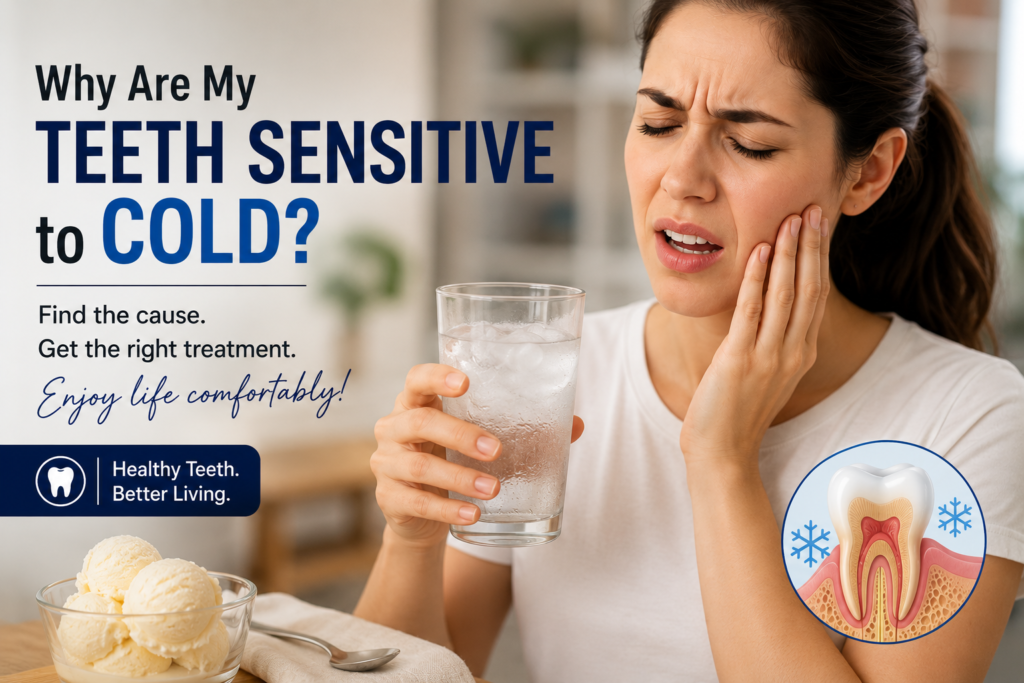
Do you feel a sudden, sharp pain when drinking cold water or eating ice cream? Tooth sensitivity to cold is extremely common, but persistent or worsening sensitivity should not simply be ignored.
In most cases, sensitivity occurs when the protective layers of the tooth become thinner or the tooth root becomes exposed. This allows temperature changes to stimulate the nerves inside the tooth, causing sudden discomfort or pain.
Understanding the cause of your sensitivity is the first step toward getting the right treatment.
What Causes Tooth Sensitivity to Cold?
Normally, the sensitive inner portions of your teeth are protected by enamel and healthy gum tissue. When this protection is reduced, cold temperatures can reach the underlying dentin and stimulate the nerves.
Some of the most common causes include:
1. Enamel Wear
Aggressive brushing, frequent consumption of acidic foods and drinks, or teeth grinding can gradually wear away the protective enamel.
Once the enamel becomes thinner, the underlying dentin may become more sensitive to cold temperatures.
2. Gum Recession
When the gums recede, part of the tooth root can become exposed.
Unlike the crown of the tooth, the root does not have a protective layer of enamel. As a result, exposed root surfaces are much more sensitive to cold foods and beverages.
3. Tooth Decay
A dental cavity can expose the deeper layers of the tooth and cause sensitivity, particularly when consuming cold or sweet foods.
If the decay progresses, it may eventually affect the dental pulp and cause more severe toothache.
4. Cracked Teeth
A crack in the tooth can allow temperature changes to reach the inner tooth structures.
Patients with a cracked tooth may experience sudden sensitivity to cold, pain while chewing, or discomfort that comes and goes.
5. Recent Dental Treatment
Temporary sensitivity can sometimes occur after certain dental procedures, including:
- Dental fillings
- Teeth whitening
- Other restorative treatments
This sensitivity is often temporary. However, if it persists or becomes severe, a dental examination is recommended.
6. Damaged or Worn Fillings
Old, worn, or damaged dental fillings can sometimes contribute to tooth sensitivity.
If a restoration is no longer sealing the tooth properly, cold substances may reach sensitive areas underneath it.
When Should You See a Dentist?
Occasional, mild sensitivity may not always indicate a serious problem. However, you should consider a dental examination if you notice any of the following:
- Severe tooth sensitivity
- Pain that is becoming worse
- Pain that continues after the cold stimulus is removed
- Spontaneous toothache without any obvious trigger
- Swelling around the tooth
- Pain while chewing
- One particular tooth that repeatedly becomes sensitive
These symptoms may indicate an underlying dental problem that requires treatment rather than simple sensitivity.
How Is Tooth Sensitivity Treated?
Treatment depends on the underlying cause of the sensitivity.
After examining your teeth and gums, your dentist may recommend one or more of the following treatments:
- Desensitising toothpaste
- Professional fluoride treatment
- Treatment for gum recession
- Dental filling for cavities
- Replacement of damaged or worn restorations
- Treatment of a cracked tooth
- Root canal treatment when the dental nerve is irreversibly affected
The right treatment can relieve sensitivity while addressing the underlying cause.
Don’t Simply Avoid Cold Foods
Avoiding ice cream, cold water, or other cold foods may temporarily prevent the discomfort, but it does not necessarily treat the underlying problem.
If your teeth repeatedly become sensitive to cold, it is important to find out why.
Early diagnosis can help prevent a minor dental problem from developing into a more complicated condition.
How Can You Reduce the Risk of Tooth Sensitivity?
Good oral hygiene and healthy dental habits can help protect your enamel and gums.
Simple Tips for Healthy Teeth
- Brush gently with a soft-bristled toothbrush.
- Avoid aggressive brushing.
- Limit excessive consumption of acidic foods and drinks.
- Wear a night guard if you grind or clench your teeth.
- Maintain regular dental check-ups.
- Treat cavities, gum problems, and damaged fillings early.
Why Choose Sanjivan Dental?
At Sanjivan Dental, a detailed clinical examination helps identify the underlying cause of tooth sensitivity.
Using modern diagnostic techniques and personalized treatment planning, our dental team focuses on providing precise and appropriate treatment based on each patient’s individual needs.
Sanjivan Dental — Advanced. Precise. Fast.
Conclusion
Sensitivity to cold is common, but persistent or severe sensitivity should never be ignored.
Whether the cause is enamel wear, gum recession, tooth decay, a cracked tooth, or a damaged restoration, identifying the underlying problem is essential for effective treatment.
If you regularly experience sharp pain when drinking cold water or eating ice cream, schedule a dental examination to determine the cause and protect your natural teeth.