By Dr. Durga Prasad Hiwale, Sanjivan Dental
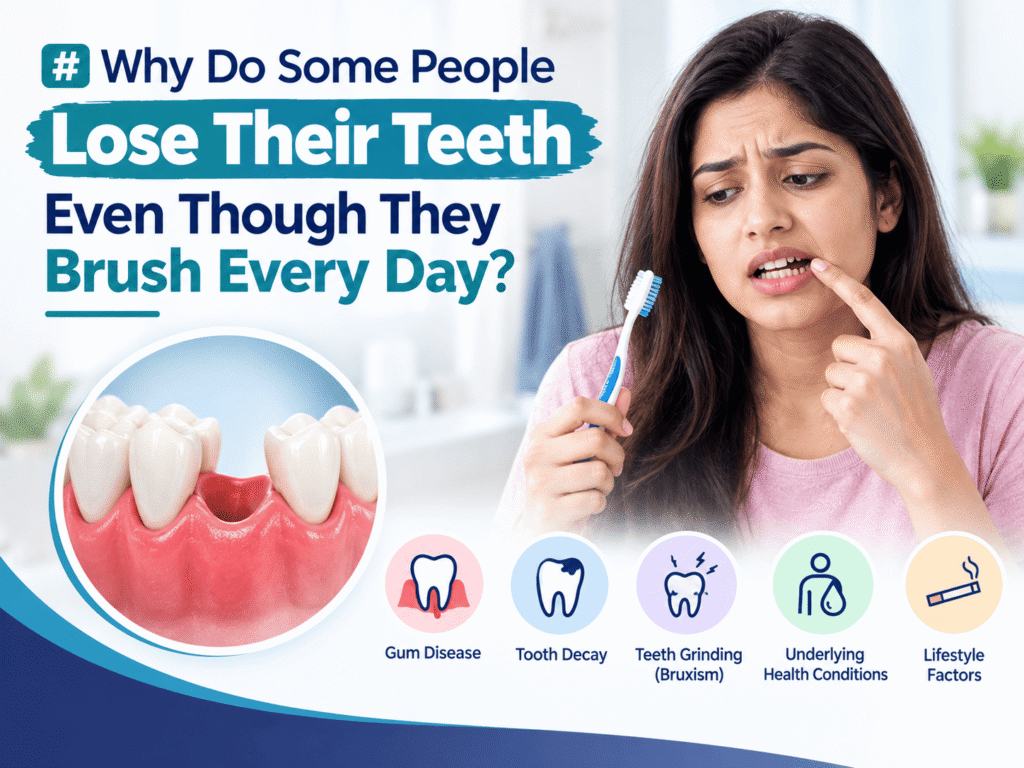
“Doctor, I brush twice every day. Then why are my teeth becoming loose?”
I hear this question quite often, and it is a very reasonable one. Most people grow up hearing: “Brush properly and your teeth will stay healthy.”
While brushing is extremely important, keeping your teeth for life involves much more than brushing alone.
Sometimes a patient who is very regular with brushing comes to us with bleeding gums, bone loss, or loose teeth. Conversely, someone who has never been particularly disciplined about dental care may have relatively healthy teeth.
So what is happening? The answer lies in a combination of your gums, supporting bone, bacteria, bite forces, habits, genetics, and regular professional care.
Your Teeth Are Not Held Only by Your Gums
A tooth is supported by an entire foundation system:
- The gum tissue around the tooth
- The periodontal ligament
- The bone surrounding the root
- The root itself
When periodontal disease progresses, the supporting bone gradually disappears underneath while the tooth may look perfectly normal in the mirror. Looking at your teeth at home is simply not enough to judge their underlying health.
Bleeding Gums Are Not Something to Ignore
One of the earliest warning signs of trouble is bleeding while brushing or flossing.
“My gums bleed because I brushed too hard.”
While trauma from hard brushing can contribute, persistent bleeding should never be accepted as normal. Inflammation caused by plaque and hardened calculus makes the gums swollen and prone to bleeding.
If this inflammation progresses deeper into the supporting tissues, it results in a loss of attachment and bone. Identifying the problem early is key before the tooth becomes mobile.
“But I Don’t Have Any Pain…”
This is precisely why gum disease is so dangerous—it rarely announces itself with pain in the early stages. A patient can suffer considerable bone loss without feeling any discomfort.
Often, the first signs patients notice include:
- Food getting repeatedly stuck
- Persistent bad breath
- Receding gums (teeth appearing longer)
- Increasing gaps or spaces between teeth
- Tooth mobility or difficulty chewing
By the time teeth start moving, the disease has already progressed significantly.
Brushing Cannot Remove Everything
Even the most thorough brushing has limits. A toothbrush cannot reach deep areas between teeth or far below the gumline.
Over time, soft plaque hardens into calculus (tartar). Once calculus forms, brushing harder will not remove it—and scrubbing too hard can actually damage your enamel and gums.
Good dental care is not about brushing harder; it is about cleaning smarter and getting professional evaluations.
Your Bite Forces Also Matter
Another factor patients often overlook is the way their teeth come together.
If certain teeth receive excessive or abnormal pressure due to an uneven bite, they become overloaded. While periodontal bone loss remains the primary cause of loose teeth, excessive bite forces act as an accelerator.
When evaluating mobile teeth, we don’t look only at the gums—we evaluate the entire bite structure.
Habits & Lifestyle Factors
Smoking is strongly linked to severe periodontal disease and can significantly impair healing. Other factors include:
- Systemic conditions (like diabetes)
- Certain medications
- Deep periodontal pockets
- Anatomy and tooth positioning
- Genetic susceptibility
This is why two people with similar brushing habits can have completely different outcomes. Dental care must always be patient-specific rather than just tooth-specific.
Can Loose Teeth Be Saved?
Sometimes, yes. But it depends on why the tooth is loose and how much bone structure remains.
Treatment options may involve:
- Deep periodontal cleaning and maintenance
- Correcting bite forces in selected cases
- Specialized periodontal therapy
- Improved home-care protocols
The earlier the diagnosis, the more options we have. However, if a tooth has lost extensive supporting bone, saving it becomes far more challenging.
What I Tell My Patients
Don’t wait for a tooth to hurt before checking your gums. Get a professional examination if you notice any of these small warning signs:
- Bleeding while brushing
- Persistent bad breath
- Food frequently getting stuck
- Receding gums
- Slight movement in your teeth
- New spaces appearing between teeth
Your toothbrush is an important daily tool, but it cannot measure the bone around your roots. Only a clinical and radiographic examination can give you that clarity.
If a tooth is unsalvageable and needs replacement, exploring modern options like How Long Do Dental Implants Last? or understanding the impact of delayed treatment via Warning Signs After Losing a Tooth can help you plan your next steps.
Periodontal Care at Sanjivan Dental
At Sanjivan Dental, our goal is not just to manage a loose tooth when it becomes a crisis. We focus on identifying why it is becoming loose in the first place so we can preserve the natural supporting tissues.
Dentistry isn’t only about repairing damaged teeth—a large part of good dentistry is preventing the foundation around those teeth from being lost in the first place.